
United Kingdom: corporate life-insurance onboarding
Corporate policyholders, beneficiary timing and policy changes for UK long-term insurers under the Money Laundering Regulations.
United Kingdom · Life insurers · FCA
Corporate policyholders · Life insurance: AML/CDD review
 By Matthew Lee
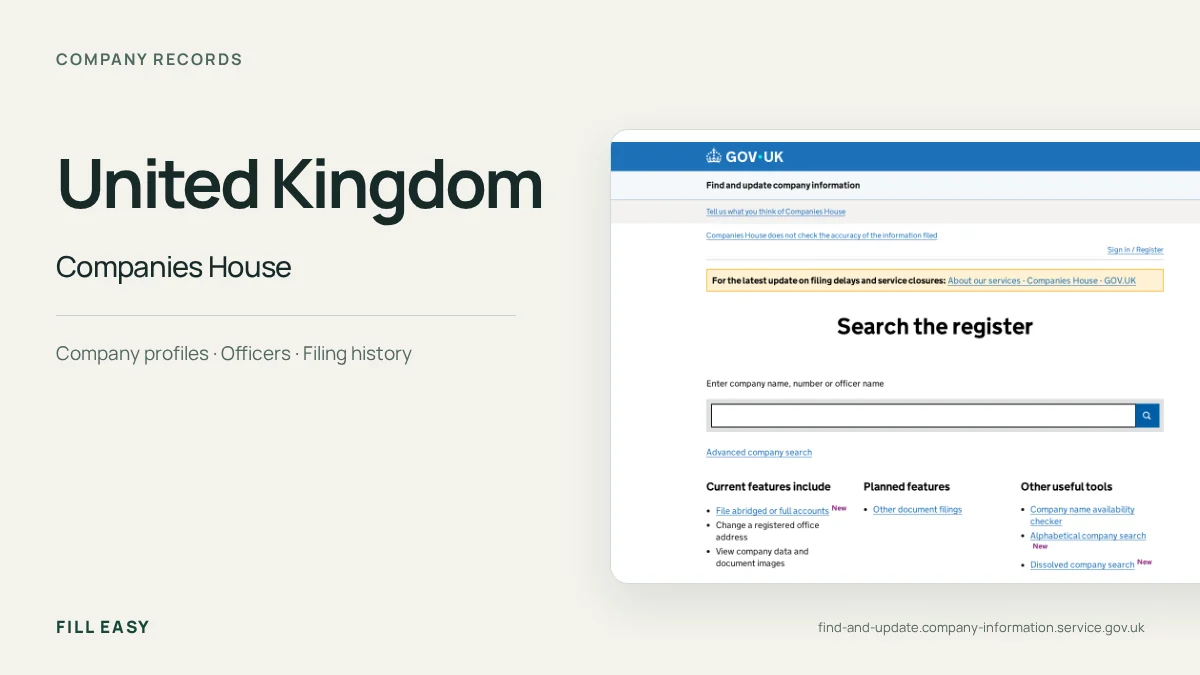
Website capture: Companies House
Regulation 10 brings covered long-term insurance business within the Money Laundering Regulations and excludes reinsurance from that definition. Obtain the company policyholder's registered particulars and constitutional information, identify beneficial owners and take reasonable measures to verify them under regulation 28. The Companies House guide explains the available UK records.
Confirm the purchase and premium payer
Verify the representative and their authority to arrange the policy. Request a company resolution or delegation covering the purchase, and identify who may subsequently assign or surrender it.
Record the insured person, premium payer and reason for cover. Where the company assigns benefits to its lender, obtain the assignment and relevant financing terms. Investigate premiums from an unrelated party or instructions to return policy money to an account unconnected to the payer.
Beneficiaries under regulation 29
Record a named beneficiary's name when designated. For a class or description, obtain enough information to establish the beneficiary's identity at payout. Verify beneficiary identity before payout; an assignment can bring forward the relevant identification point under regulation 29.
Determine whether the beneficiary or its beneficial owner is a PEP under the applicable payout provisions. Higher-risk cases require the specified senior-management involvement and enhanced scrutiny.
Keep policyholder CDD current, including ownership and representatives. Review beneficiary amendments, premium changes, surrender and assignment instructions against the current policy rights, and retain the evidence and payment decision.